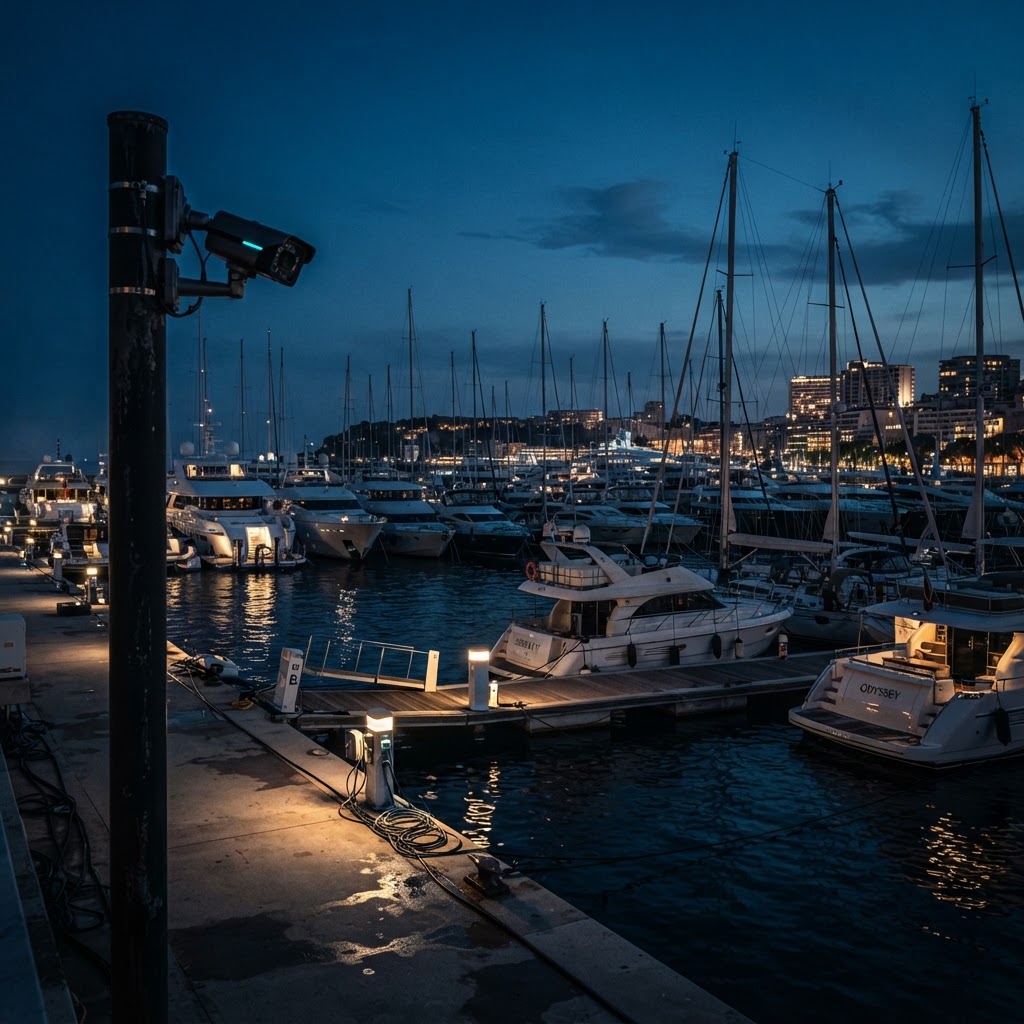
Marina Security: Why Cameras Alone May Not Be Enough to Stop Boat Theft
A recent stolen sailboat case highlights the difference between recording a security incident and having the ability to respond while it's happening.
A recent sailboat theft that began at a Jersey City marina and ended several days later in Newport, Rhode Island, raises an important question for marina owners and operators:
Is your security system designed to document what happened, or help you respond while it's happening?
According to ABC7 New York, a sailboat was reportedly stolen from Liberty Harbor Marina in Jersey City around 11 p.m. on August 22. Surveillance cameras captured the suspected thief, and authorities subsequently launched a search that extended along the East Coast.
The incident illustrates a challenge that extends well beyond one marina or one stolen vessel.
Boats, equipment, fuel, vehicles, buildings and docks can represent significant assets spread across large waterfront properties. At night, staffing may be reduced while those assets remain exposed.
Traditional video surveillance is an important part of protecting them. But cameras alone are often reactive. They can show you what happened.
A more proactive marina security strategy is designed to identify what's happening right now.
Cameras can tell you what happened. Remote Guarding can help you respond while it's happening.
From Reactive Surveillance to Proactive Marina Security
Consider the difference in how a potential incident may unfold.
Side by side
Traditional Surveillance vs. Remote Guarding
Reactive
Traditional Video Surveillance
1.Suspicious activity occurs
2.Individual approaches a restricted area
3.Vessel or property is accessed
4.Individual leaves
5.Incident is discovered
6.Recorded video is reviewed
7.Authorities are notified
Watching what already happened.
Proactive
Remote Guarding
1.Suspicious activity is detected
2.An alert is generated
3.A trained remote security professional evaluates the activity
4.Live voice-down intervention can be initiated when appropriate
5.Marina personnel and/or authorities can be notified per protocol
6.The incident may be disrupted before it escalates
Responding to what is happening.
That is the fundamental difference between watching what happened and responding to what is happening.
Why Marinas Present Unique Security Challenges
A marina isn't a traditional commercial property. Security may need to extend from the parking lot all the way to the dock.
Depending on the property, vulnerabilities can include:
Marina entrances
Parking areas
Pedestrian access points
Docks and slips
Boats and yachts
Fuel areas
Equipment and storage
Offices and buildings
Restricted areas
Vehicle entrances and exits
There is rarely one technology capable of protecting every one of these areas. That's why effective marina security should be layered.
Building a Layered Marina Security Strategy
Max Security USA combines security technology, monitoring and physical security solutions to help marina operators build a strategy around their specific property.
24/7 Remote Guarding
Security technology paired with trained professionals monitoring from the Max Security USA Command Center, who can evaluate activity and act on established protocols.
Video analytics can help identify defined activity and bring potential security events to the attention of monitoring personnel — not just record for later review.
With strategically placed speakers, a remote security professional may address an individual directly when appropriate — making it clear someone is watching right now.
For properties requiring a physical presence, security personnel can be incorporated into the broader strategy alongside Remote Guarding and technology.
The objective is simple: identify potential threats earlier and create an opportunity to respond before an incident becomes a loss. Deterrence becomes significantly different when someone realizes they aren't simply being recorded — imagine approaching a restricted dock after hours and hearing:
"This area is under live surveillance. Security is monitoring your activity. Please leave the property immediately."
From "What Happened?" to "What's Happening Right Now?"
The question isn't whether marinas should have cameras. They should. The more important question is: what happens when those cameras detect something?
If the answer is that someone reviews the recording the next morning, the system is primarily documenting events. Remote Guarding is designed to change that equation. It connects surveillance technology with trained security professionals who can assess activity and respond according to established procedures.
For high-value, mobile assets such as boats, that distinction can be particularly important. Once a vessel leaves the dock, the situation becomes considerably more complicated. The better opportunity may be at the marina, before it ever leaves.
Your Marina Doesn't Close When Your Office Does
Boats remain in their slips. Vehicles remain in parking lots. Equipment remains on the property. Fuel areas, docks, buildings and access points still need protection.
Your marina may close for the evening. Your security strategy shouldn't.
Max Security USA provides integrated security solutions for marinas, yacht clubs, boatyards and waterfront properties, including:
24/7 Remote Guarding
AI-enabled video surveillance
Live voice-down capabilities
Access control systems
License plate recognition
Gate systems
On-site security
Rather than approaching each technology separately, we evaluate how the different layers can work together across the property.
How Protected Is Your Marina After Hours?
Max Security USA can evaluate your marina's entrances, parking areas, docks, buildings and other vulnerable locations to identify opportunities to strengthen security. The goal isn't simply to install more cameras — it's to create a smarter security strategy designed to:
Detect earlier. Deter faster. Respond smarter.
Speak to a Security Specialist
Talk with a MAX specialist about protecting your marina from the parking lot to the dock.
Remote Guarding combines surveillance technology with trained remote security professionals who can evaluate security events as they occur and respond according to predetermined protocols.
Remote Guarding can extend security coverage beyond normal business hours by using cameras, analytics and remote security personnel to identify and evaluate activity across designated areas of the property.
Video surveillance captures activity. Remote Guarding adds active monitoring and the ability for trained security personnel to evaluate activity and take appropriate action according to established protocols.
An integrated marina security strategy can incorporate Remote Guarding, video surveillance, access control, license plate recognition, gate systems and other technologies based on the property's requirements.
Security needs vary by property, but assessments may include entrances, parking areas, pedestrian access points, docks, slips, fuel areas, buildings, storage areas and other restricted or high-value locations.
Yes. Max Security USA can evaluate a marina's existing security environment and identify opportunities to strengthen detection, deterrence, monitoring and access control.